Last week, I was invited by the private Ashby RecOps Community to present on AI in RecOps. As I prepared my presentation, I reflected on a fundamental shift occurring in our field that places experience at the heart of recruitment strategies.
This article explores the concept of Experience-First Rec Ops and why it's becoming increasingly crucial for TA organisations to adopt this approach.
Recruitment Operations (RecOps) has long been the backbone of efficient hiring processes. Traditionally, RecOps has focused on five key pillars: process optimisation, technology integration, stakeholder collaboration, data analytics, and candidate experience. These elements have served as the foundation for streamlining recruitment workflows and improving efficiency. However, this approach often views the recruitment process as a series of tasks to be completed, rather than a journey experienced by various stakeholders.
Enter the new perspective: Experience-First Rec Ops. This approach shifts the focus to centre on the experiences of all parties involved in the recruitment process. It recognises that the journey is just as important as the destination, considering the perspectives of:
- Hiring Managers: Those who initiate the recruitment process and ultimately make hiring decisions.
- Recruiters: The professionals who facilitate the entire recruitment journey.
- Candidates: The individuals seeking new opportunities and navigating the application process.
By prioritising these experiences, organisations can create a more holistic and effective recruitment strategy that benefits all parties involved.
Why Experience-First Matters in Recruitment
You might wonder, "Why should we prioritise experiences in recruitment?" The answer lies in the significant impact that positive experiences can have on recruitment outcomes.
Consider this: when candidates have a positive experience during the recruitment process, they're more likely to accept job offers, recommend the company to others, and even become customers if applicable.
Conversely, poor experiences can hinder talent acquisition and retention. A clunky application process, lack of communication, or prolonged decision-making can lead to candidate drop-off, damaged employer brand, and missed opportunities to secure top talent.
For hiring managers, a smooth and efficient process means less time spent on administrative tasks and more time focusing on finding the right fit for their team. And for recruiters, a well-designed experience can lead to increased productivity, job satisfaction, and better relationships with both candidates and hiring managers.
Key Elements of a Good Experience in Recruitment
So, what constitutes a good experience in recruitment?
- Convenience: People want to engage in the recruitment process when and where it suits them. This could mean offering flexible interview scheduling options, social advertising, mobile-friendly application processes or chatbots to deal with out-of-hours queries.
- Immediacy: Delays can be frustrating. Minimising waiting times, whether it's in responding to applications or making hiring decisions, can significantly enhance the overall experience.
- Agency: Empowering stakeholders with self-service options gives them a sense of control over the process. This could involve allowing candidates to schedule their own interviews or providing hiring managers with real-time access to applicant information.
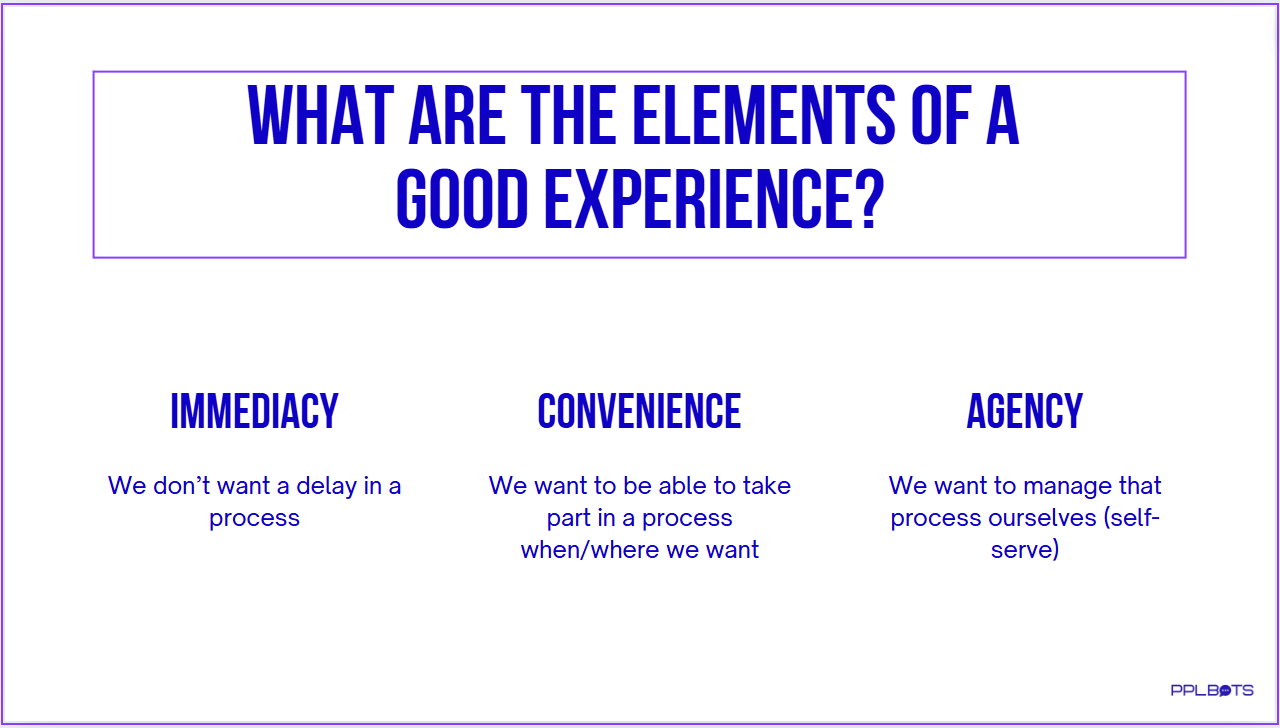
These elements apply not just to candidates, but to all stakeholders in the recruitment process. By focusing on these aspects, organisations can create a more satisfying and effective recruitment journey for everyone involved.
Reimagining Recruitment Processes Through an Experience Lens
Now that we understand the importance of experience-first thinking, how can we apply this to reimagine our recruitment processes? Let's explore a few key areas:
Application Process: Is your application process a barrier or a gateway? Many organisations still require candidates to create accounts and fill out lengthy forms, often duplicating information already present in their CVs. An experience-first approach might involve simplifying this process, perhaps allowing initial applications via LinkedIn profiles or implementing a one-click apply option.
Interview Scheduling: How much back-and-forth does it take to schedule an interview? An experience-first approach could involve using scheduling software that allows candidates to select from available time slots, taking into account the schedules of all involved parties.
Communication: Do your candidates feel informed throughout the process? Regular, timely updates can make a world of difference. This doesn't necessarily mean more work for recruiters - automated updates at key stages of the process can keep candidates engaged and informed.
Decision-making: How long does it take from final interview to offer? Streamlining the decision-making process not only improves the candidate experience but also increases the likelihood of securing top talent before they accept offers elsewhere.
By examining each step of the recruitment process through the lens of experience, organisations can identify areas for improvement that benefit all stakeholders.
The Ripple Effects of Experience-First Rec Ops
Adopting an experience-first approach to RecOps isn't just about making the process more pleasant—it can have far-reaching effects on your organisation's overall recruitment success. Let's explore some of these ripple effects:
Improved Employer Branding: When candidates have positive experiences, they're more likely to share them with others, even if they don't get the job. This word-of-mouth marketing can significantly enhance your employer brand, making it easier to attract top talent in the future.
Higher Quality Candidates: A smooth, respectful recruitment process can encourage more qualified candidates to complete their applications and remain engaged throughout the process. This larger, more committed talent pool increases your chances of finding the perfect fit for your roles.
Increased Offer Acceptance Rates: Candidates who have had a positive experience throughout the recruitment process are more likely to accept job offers. They've already formed a favourable impression of your organisation and can better envision themselves as part of it.
Better Hiring Manager Satisfaction: When hiring managers can easily track the progress of their open positions and have timely access to high-quality candidates, their satisfaction with the recruitment process improves. This can lead to better collaboration between hiring managers and the recruitment team.
Enhanced Recruiter Productivity and Job Satisfaction: By streamlining processes and focusing on creating positive experiences, recruiters can work more efficiently and effectively. This can lead to increased job satisfaction and reduced burnout among your recruitment team.
Overcoming Challenges in Adopting an Experience-First Approach
While the benefits of an experience-first approach are clear, implementing this shift isn't without its challenges. Here are some common hurdles organisations might face:
Balancing Efficiency with Personalisation: How can we create personalised experiences without sacrificing efficiency? This is a delicate balance that often requires thoughtful use of technology and clear communication strategies.
Managing Expectations Across Different Stakeholder Groups: What constitutes a good experience for a candidate might be different from what a hiring manager values. How can we create processes that satisfy all parties?
Adapting to Diverse Candidate Preferences: In a global job market, candidates may have vastly different expectations and preferences. How can we create flexible processes that cater to this diversity?
Overcoming these challenges requires a commitment to continuous improvement and a willingness to gather and act on feedback from all stakeholders involved in the recruitment process.
The Future of Experience-First Rec Ops
As we look to the future, what might experience-first RecOps evolve into? Here are a few possibilities:
Predictive and Proactive Recruitment Experiences: Imagine a system that could anticipate hiring needs before they arise, or predict which candidates are most likely to be a good fit for your organisation's culture. This proactive approach could significantly enhance the experience for all stakeholders.
Hyper-Personalisation in Recruitment Journeys: As technology advances, we may see recruitment processes that adapt in real-time to individual preferences and behaviours, creating truly personalised experiences for each candidate.
Emerging Technologies Enhancing Experiences: While we're not focusing on specific tools, it's worth noting that emerging technologies will likely play a significant role in shaping future recruitment experiences. The key will be using these technologies in ways that genuinely enhance, rather than complicate, the recruitment journey.
Embracing the Experience-First Mindset
As we've explored throughout this article, adopting an experience-first approach to RecOps isn't just about making the recruitment process more pleasant—it's about creating a more effective, efficient, and successful talent acquisition strategy.
By prioritising the experiences of candidates, hiring managers, and recruiters alike, organisations can create a recruitment process that not only attracts top talent but also enhances their employer brand, improves hiring outcomes, and boosts overall satisfaction with the recruitment function.
The shift to experience-first thinking requires a change in mindset. It asks us to view recruitment not as a series of tasks to be completed, but as a journey experienced by multiple stakeholders. It challenges us to constantly question whether our processes are serving the needs of those involved, rather than just meeting operational metrics.
As you consider your own RecOps strategy, ask yourself: Are we creating experiences that we would want to have ourselves? Are we making it easy and enjoyable for people to engage with our recruitment process? Are we valuing the time and effort of all parties involved?
By continually asking these questions and striving to improve the experiences we create, we can build recruitment processes that are not only more effective but also more human-centred. And in doing so, we can transform RecOps from a behind-the-scenes operational function into a strategic driver of organisational success.
What's your next step in creating an experience-first RecOps strategy? Perhaps it's time to gather feedback from your candidates, hiring managers, and recruiters. Or maybe you need to map out your current recruitment journey and identify points of friction. Whatever it is, remember that the goal is to create a recruitment process that people genuinely enjoy participating in—because when they do, everyone wins.
If you are a RecOps professional looking for a RecOps community, Ashby’s community is one of the best out there for you to join. Here is a link to the application