There’s a bit of a frenzy in recruitment right now, isn’t there? You’ve probably noticed it yourself. Everywhere you turn, there’s chatter about Generative AI (Gen AI) and how it’s going to change everything. You’re being told it’s the next big thing—an absolute must-have in your tech stack. But before we all rush into integrating Gen AI into our recruitment processes, let’s take a moment to consider something fundamental: are our current processes in recruitment fit for purpose? Or, to put it bluntly, are we just plastering over cracks without addressing the core issues?
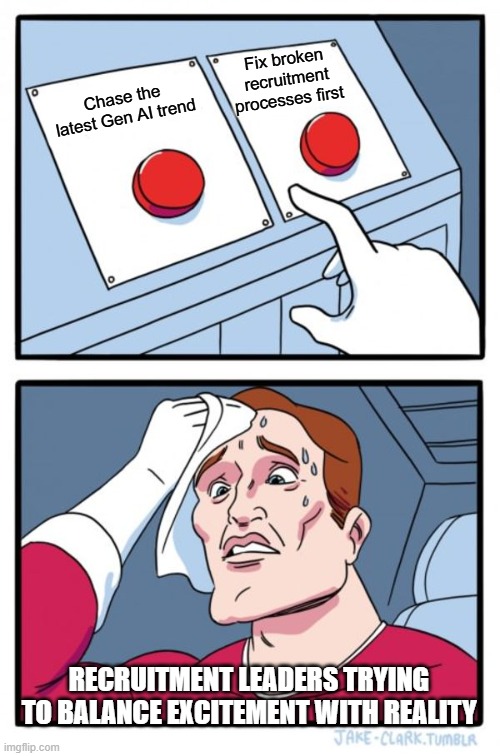
The Familiar Trap: Chasing the Shiny New Thing
It’s not the first time we’ve been here. In the past, we’ve seen businesses jump headfirst into the latest trend—whether it was apps, automation, or something else—without first resolving the deeper problems in their systems. Many organisations invested heavily in mobile apps, only to realise they hadn’t addressed their customers' most basic needs. The same thing is happening now with AI.
Before we get too carried away with the idea of AI ‘revolutionising’ recruitment (there’s that word again), ask yourself: Is my recruitment process actually broken? And if so, where?
The Problems that Gen AI Won’t Fix
Take a step back and examine the candidate journey in your organisation. What does it look like? Are candidates dropping out because the process is too complicated or drawn out? Are recruiters bogged down with repetitive tasks? Or perhaps communication is inconsistent, leaving candidates in the dark.
These are the kinds of issues that Gen AI, no matter how impressive, won’t necessarily fix. For example, a sophisticated AI screening tool is no good if your recruiters are drowning in admin work or if the process for giving candidates feedback is inefficient.
Consider these questions:
- Are candidates getting lost in the process?
- Is communication timely and effective?
- Are recruiters spending too much time on manual tasks?
If these issues exist in your organisation, it’s a sign that you need to focus on the fundamentals of your recruitment process before implementing Gen AI. The fancy tech won’t solve these problems—it may even complicate them.
Get the Basics Right First
Before you think about Gen AI, focus on fixing the broken parts of your recruitment funnel. It’s critical to ensure that your basic processes are seamless, automated where necessary, and effective in delivering a good candidate experience.
Consider your current systems:
- Are they intuitive and user-friendly?
- Can your candidates move through the process smoothly, without unnecessary delays?
- Are your recruiters equipped with tools to make their jobs easier, not harder?
One proven tool that’s been around for some time now is Conversational AI. Unlike Gen AI, which is still finding its feet in recruitment, conversational AI is a mature, reliable solution that can automate many of the repetitive, time-consuming tasks in your recruitment process—things like answering frequently asked questions, scheduling interviews, or even providing updates to candidates. These are the kinds of tasks that free up your recruiters to focus on higher-value activities like building relationships and engaging with top talent.
For example, imagine a scenario where a candidate is unsure about the next steps after submitting an application. Instead of waiting for a recruiter to get back to them, they could instantly interact with a virtual assistant on your careers page. That’s a basic, quick win that solves a real pain point.
Conversational AI: A Proven Solution That Works Today
We don’t need to wait for the magic of Gen AI to deliver value in recruitment. Conversational AI is already here, and it’s already delivering results. When used effectively, it can help with:
- Automating simple tasks like interview scheduling and answering common questions.
- Providing candidates with immediate responses and guiding them through the application process.
- Freeing up your recruitment team’s time to focus on tasks that require a human touch—relationship building, understanding candidate motivations, and assessing cultural fit.
It’s adaptable, scalable, and most importantly, it works today. So why leap straight into Gen AI when the solution you need is already available?
The Risks of Jumping to Gen AI Too Soon
Now, I’m not saying that Gen AI doesn’t have its place in recruitment. It certainly does—just not yet. The technology is still evolving, and there are significant risks involved, particularly around bias, transparency, and data privacy. We've all seen how algorithms can unintentionally reinforce bias or make questionable decisions when not properly monitored.
In recruitment, these risks can have real consequences. The stakes are high when you’re making decisions about people’s livelihoods. Imagine the damage if an AI-powered tool wrongly discards qualified candidates because it hasn’t been properly calibrated. If your process isn’t robust to begin with, adding Gen AI may just add more complexity and risk.
The Right Balance: Focus on What’s Broken
Instead of rushing to adopt the latest tech, take a moment to fix what’s broken in your recruitment process. Ask yourself:
- Are my candidates getting the experience they deserve?
- Are my recruiters being productive and adding value, rather than getting bogged down in manual tasks?
- Where are the real gaps in my recruitment process, and how can I address them with the tools already available?
Before jumping to Gen AI, make sure you’ve implemented the solutions that can solve your current problems. Tools like conversational AI can streamline and simplify your processes today, without the risks or hefty investments that come with Gen AI.
Don’t Get Distracted: Fix Today, Prepare for Tomorrow
Yes, Gen AI has incredible potential—but it’s not the answer to every recruitment problem. The key is to be strategic. Don’t let the allure of the latest technology distract you from addressing the real, tangible issues your candidates and recruiters are facing today.
Fix what’s broken first, and then you’ll be in a much better position to take advantage of Gen AI when the time is right. The future will always be full of exciting developments, but today’s problems deserve your full attention. Get that right first, and you’ll be ready for whatever comes next.