As the talent acquisition (TA) landscape evolves, the spotlight is firmly on technologies that drive efficiency, enhance candidate experiences, and deliver measurable business value. Among these, recruiting chatbots and AI-powered tools have emerged as key enablers of modern hiring strategies. The 2024 RL100 x Fosway Talent Acquisition Realities Report underscores the growing demand for these technologies, alongside the persistent challenges of adoption and integration.
This report explores the transformative potential of chatbots and AI in talent acquisition, addressing current adoption gaps and offering actionable insights for HR leaders to maximise their impact.
The Rise of Recruiting Chatbots: Streamlining Candidate Engagement
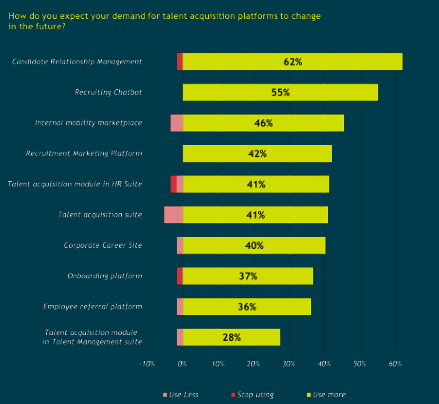
The report reveals that 55% of organisations expect to increase their use of recruiting chatbots in the near future. This surge in interest reflects a growing recognition of chatbots’ ability to address critical hiring challenges, including candidate engagement, communication delays, and administrative burden.
Opportunities:
- Always-On Interaction: Chatbots enable 24/7 communication, ensuring candidates receive instant responses, scheduling assistance, and application status updates.
- Personalised Engagement at Scale: With natural language processing (NLP), chatbots can tailor conversations to reflect the candidate’s journey, improving their experience and perception of the organisation.
- Cost-Effective Screening: Automating the initial stages of recruitment, such as pre-screening and FAQs, reduces time-to-hire and allows recruiters to focus on high-value tasks.
Challenges to Overcome: Despite their promise, many chatbots are still limited to transactional interactions. To move beyond these constraints, organisations must prioritise investments in AI-powered chatbots capable of nuanced dialogue and predictive insights.
AI in Talent Acquisition: Between Promise and Reality
High Expectations, Limited Adoption The report highlights a paradox: while expectations of AI’s impact in TA are surging, its adoption remains limited. Many recruiters remain unconvinced that AI will deliver the transformational outcomes it promises, and its integration is often constrained to niche applications.
Strategic Benefits of AI in TA:
- Enhanced Decision-Making: AI can analyse vast datasets to identify the best-fit candidates based on skills, culture, and predicted performance.
- Reducing Bias: Properly designed AI algorithms can help mitigate unconscious bias, promoting fairer hiring practices.
- Improved Retention: Predictive analytics can forecast a candidate’s likelihood of thriving in the role, improving the quality of hire and long-term retention.
Current Limitations:
- Fragmented Use Cases: AI adoption is largely confined to specific tasks like resume parsing, rather than end-to-end recruitment processes.
- Lack of Confidence: Recruiters are wary of over-relying on AI, particularly in decision-making processes where human oversight remains critical.
- Budget Constraints: Economic pressures, as noted in the report, often push AI initiatives down the priority list, with only high-ROI use cases getting greenlit.
Bridging the Gap: From Potential to Practice
To realise the full potential of chatbots and AI, HR leaders must take deliberate, future-focused steps:
Invest in Unified, Scalable Solutions
The report underscores the fragmentation of TA platforms as a major pain point. Organisations must look for chatbot and AI tools that integrate seamlessly with applicant tracking systems (ATS) and CRM platforms, enabling consistent workflows and data sharing.
Focus on Candidate Experience
Chatbots and AI should not just be tools for recruiters but should also enhance the candidate journey. From conversational chatbots that guide applicants through the process to AI-driven tools that provide personalised job recommendations, these technologies must deliver real value to job seekers.
Upskill TA Teams in AI and Data
Recruiters need to feel confident working alongside AI tools. Organisations must invest in training TA teams to interpret AI insights, ensure ethical use, and maintain oversight.
Track ROI and Build the Business Case
With budgets under scrutiny, it is crucial to measure and articulate the impact of chatbots and AI. Metrics like time-to-hire reduction, candidate satisfaction scores, and improved quality of hire can demonstrate the business value of these investments.
Reframing the Role of Chatbots and AI in Talent Acquisition
To lead the conversation on AI and chatbots in recruitment, HR and Recruitment Leaders must go beyond surface-level adoption and position these technologies as enablers of strategic transformation. This requires shifting the narrative from transactional efficiency to collaborative enhancement, where AI augments human expertise rather than replacing it.
Introducing Collaborative Intelligence in Recruitment
The concept of "Collaborative Intelligence" highlights the partnership between AI tools and human recruiters. By embracing this framework, organisations can reimagine AI as a supportive force that amplifies recruiter effectiveness rather than a disruptor.
For example, chatbots can handle routine candidate interactions—answering FAQs, scheduling interviews, or initial screenings—freeing recruiters to focus on high-value tasks like building relationships with top-tier candidates and advising hiring managers. Meanwhile, AI’s predictive capabilities can guide recruiters toward better hiring decisions, offering insights based on data patterns that humans alone might overlook.
Positioning Chatbots as Candidate Experience Champions
Recruiting chatbots are uniquely positioned to enhance candidate engagement:
- Consistency at Scale: A chatbot doesn’t sleep, ensuring every candidate receives timely, consistent responses no matter the time of day.
- Personalisation Through Data: By leveraging CRM integrations, chatbots can deliver tailored recommendations and updates, making every candidate feel valued.
- Removing Bottlenecks: Whether it’s resolving queries instantly or facilitating smooth interview scheduling, chatbots can drastically reduce friction in the hiring process.
These advancements shift chatbots from being merely operational tools to becoming ambassadors of your employer brand, setting the tone for a superior candidate experience.
Building Ethical AI Frameworks
One of the key barriers to adoption is scepticism about AI’s ethical implications. To establish thought leadership, HR professionals should champion responsible AI use by:
- Advocating for transparent algorithms that clearly explain how decisions are made.
- Establishing bias audits to ensure fair outcomes for all candidates.
- Keeping humans in the loop for critical decision-making processes, particularly in sensitive areas like candidate rejection.
This approach not only ensures compliance but also builds trust among both internal teams and external talent pools.
Owning the Data Conversation
The rise of AI and chatbots also opens up new avenues for data collection and analysis. As organisations begin to measure candidate sentiment, time-to-hire, and chatbot efficiency, they must set the standard for what "good" looks like in TA metrics. By leading discussions around these benchmarks, HR leaders can influence the way the industry evaluates success.
Leading the Way Forward
Recruiting chatbots and AI represent an inflection point for talent acquisition. They offer scalable solutions to longstanding challenges, from candidate engagement to data-driven decision-making. However, realising their full potential requires a deliberate strategy that integrates these tools into the broader TA ecosystem.
HR leaders must take a proactive role in shaping the narrative around AI and chatbots, positioning their organisations as pioneers in modern, ethical hiring practices. By focusing on candidate experience, integration, and upskilling, they can ensure that these technologies deliver sustainable value.
Take this question back to your business: "How can chatbots and AI elevate our talent acquisition strategy in 2025?"