The rapid advancement of artificial intelligence (AI) has dramatically transformed the world of work over the past decade. From automating routine tasks to unleashing new levels of productivity, these intelligent technologies have become indispensable tools in the modern enterprise.
However, the 2024 Slack Workforce Index reveals an emerging paradox when it comes to AI adoption in the workplace. On one hand, the report shows that executives are fully embracing the AI revolution, with 99% planning to invest in it this year and 97% feeling a strong sense of urgency to incorporate it into their business operations.
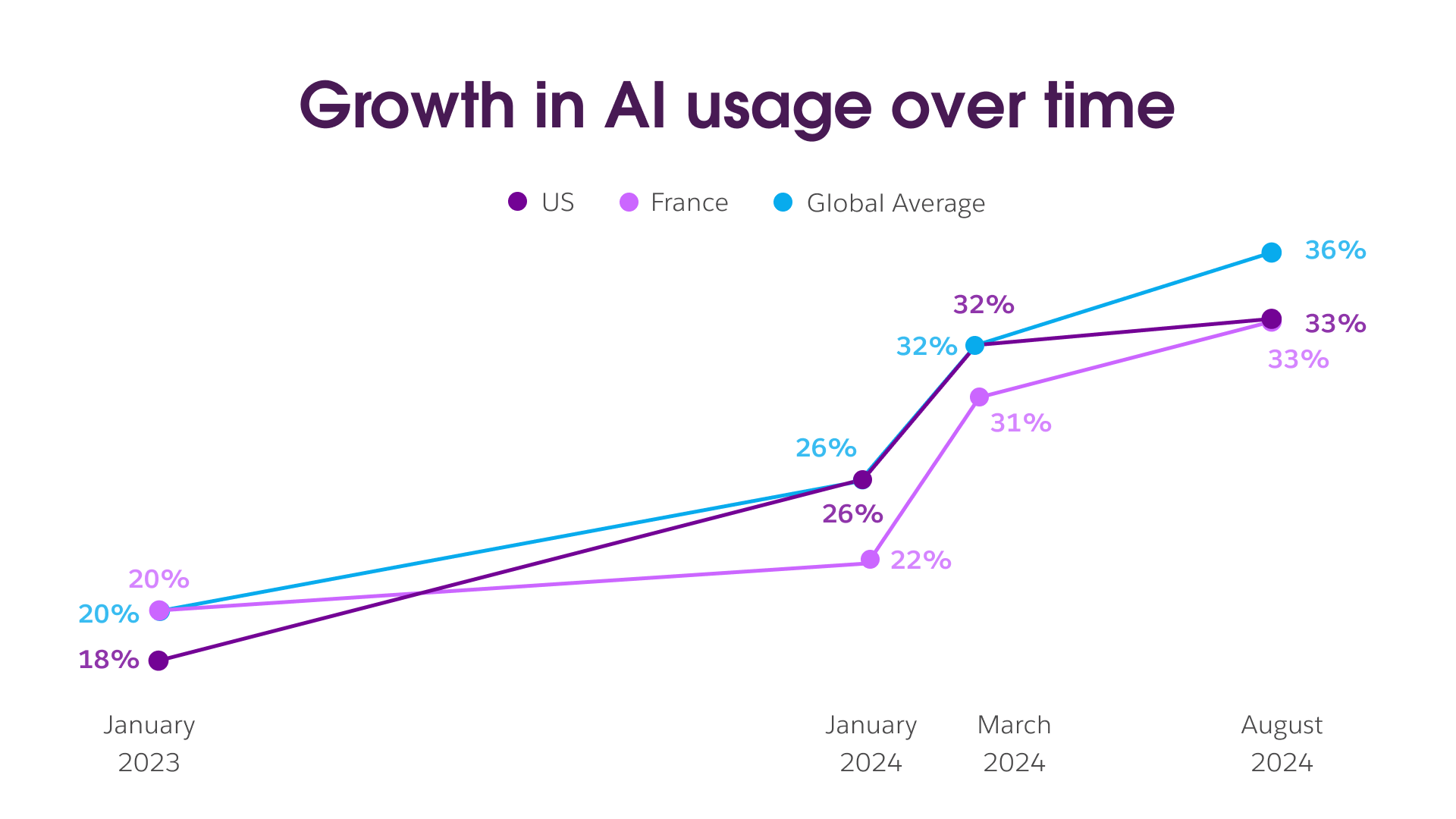
Yet, for the first time since the arrival of generative AI, the data also indicates a concerning cooling of enthusiasm and uptake among desk workers. Over the past three months, AI adoption rates have stalled in countries like France and the U.S., with only marginal growth. Worse still, nearly half (48%) of all desk workers say they would be uncomfortable admitting to their manager that they used AI for common workplace tasks.
Understanding the Employee Perspective
So why the growing reluctance among employees when it comes to AI? The Slack Workforce Index points to a few key factors:
- Feeling of Unfairness: Many workers see using AI as "cheating" and fear being perceived as less competent or even lazy by their managers.
- Lack of Training: The report finds that 61% of desk workers have spent less than 5 hours total learning how to use AI, hampering their ability to effectively leverage these tools.
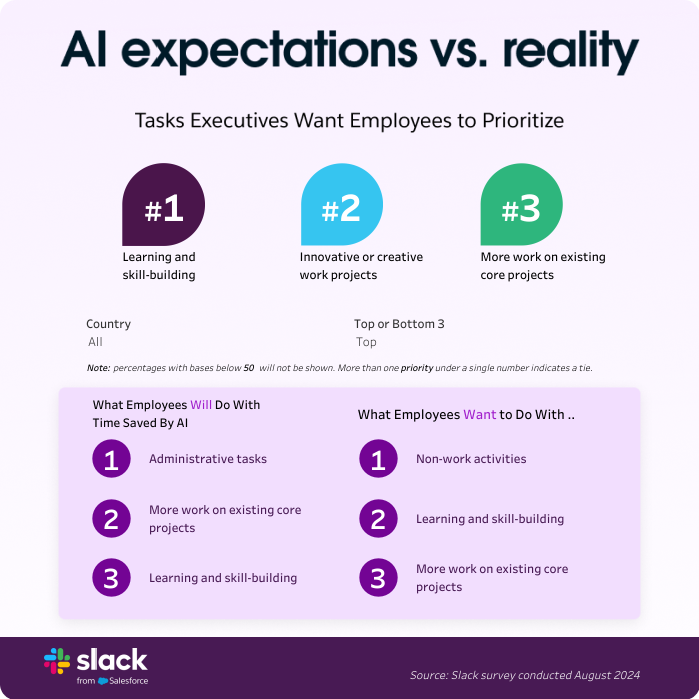
- Misalignment of Expectations: Employees want AI to free up time for meaningful work, but they fear it will instead lead to increased busy work and heavier workloads.
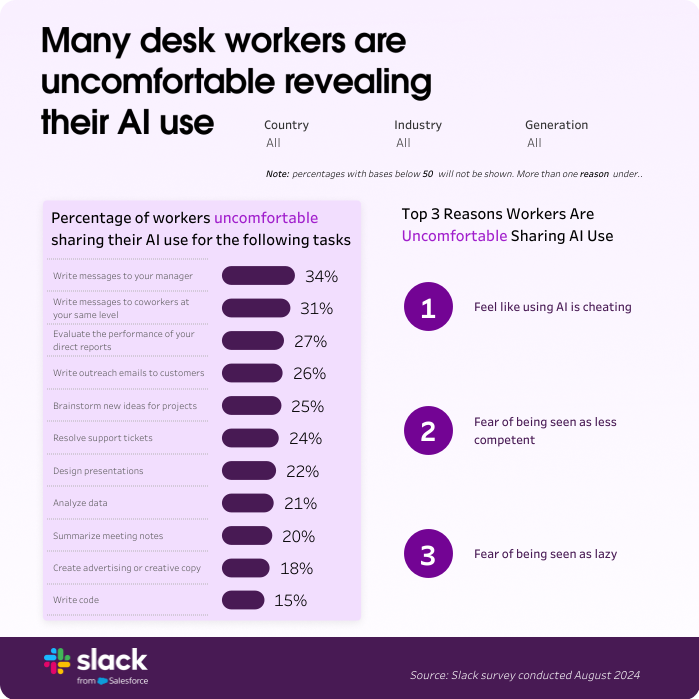
These findings underscore a fundamental disconnect between the C-suite's enthusiasm for AI and the frontline workforce's readiness to embrace it. If organisations fail to address this widening gap, they risk derailing their entire digital transformation efforts.
The Path Forward: Empowering Employees for AI-Driven Success
To unlock the true potential of AI and ensure lasting success, HR and talent leaders must place empowering their workforce at the heart of their transformation strategies. This means taking urgent action on two fronts:
- Ramp Up AI Training and Upskilling: The Slack Workforce Index reveals that 76% of desk workers feel a strong sense of urgency to become AI experts. Organisations should lean into this intrinsic motivation by investing heavily in comprehensive training programs that equip employees with the skills and confidence to effectively leverage AI.
- Align AI Initiatives with Employee Needs: When implementing AI solutions, it's crucial that leaders carefully consider the impact on their workforce. Prioritise use cases that genuinely enhance the employee experience, rather than just boosting productivity metrics. This could involve freeing up time for meaningful work, providing personalised coaching and support, or streamlining repetitive tasks.
By addressing the root causes of worker discomfort and fostering a more AI-fluent, engaged workforce, organisations can unlock the full transformative potential of these emerging technologies. The 2024 Slack Workforce Index makes it clear - the time to act is now.
The Imperative for HR and Talent Leaders
As the gatekeepers of organisational culture and employee development, HR and talent professionals have a pivotal role to play in bridging the AI adoption gap. They must spearhead the charge to empower their workforce, positioning their teams and the broader organisation for long-term, sustainable success in the AI-driven future of work.
The stakes have never been higher. Organisations that fail to prioritise employee readiness and buy-in when it comes to AI risk being left behind, unable to capitalise on the massive productivity and innovation gains these technologies can deliver. Conversely, those that strategically invest in upskilling, change management, and employee-centric AI initiatives will be poised to thrive.
The 2024 Slack Workforce Index serves as a clarion call for HR and talent leaders. It's time to step up, reshape your organisation's approach to AI, and empower your workforce to embrace the opportunities of this transformative era. The future of work is here - are you ready to lead the charge?