The digital transformation of HR is no longer a futuristic concept; it's the present reality. We are awash in a sea of technological innovation, with Artificial Intelligence (AI) promising to reshape every facet of the employee lifecycle. From talent acquisition and onboarding to performance management and learning development, the allure of AI is strong. It whispers of streamlined processes, data-driven decisions, and the tantalising prospect of finally conquering the perennial challenge of finding and retaining top talent.
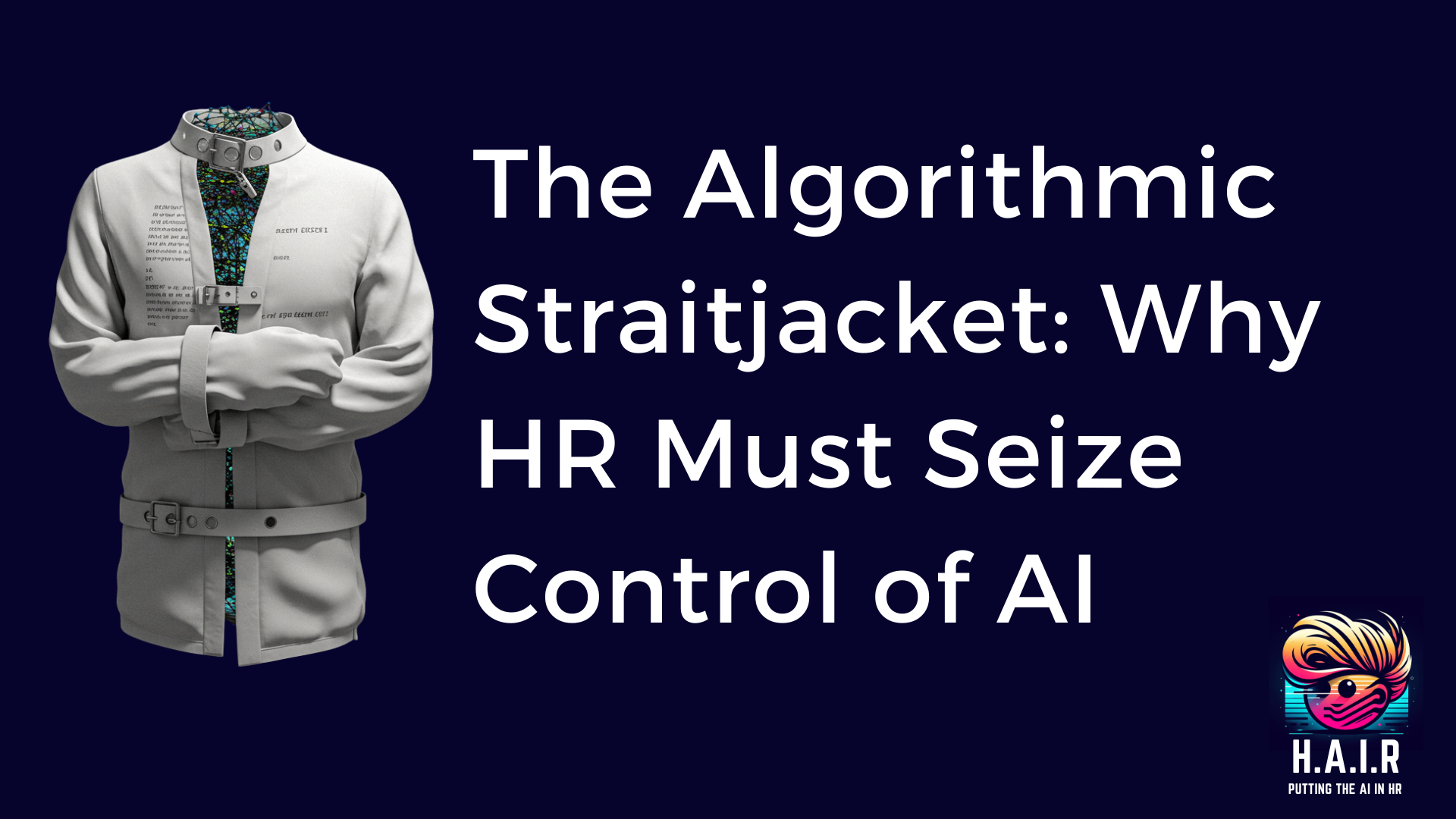
Yet, as we eagerly embrace these technological advancements, a critical question lingers, often unasked or conveniently ignored: who is truly in control? Are we the masters of these algorithms, or are we slowly becoming their servants? My recent discussion with Arctic Shores brought this into sharp focus with the phrase "be in control of the algorithm." It's a concept that should be ringing alarm bells throughout our industry, a call to action that demands our immediate attention.
The recent report by NewsGuard into the weaponisation of AI chatbots by Russian propaganda networks serves as a stark and sobering warning. It reveals a disturbing reality: these powerful AI tools, the very systems we are increasingly relying on for information and decision-making, can be manipulated and subverted to spread disinformation on a massive scale. If these models can be so readily influenced to advance political agendas, what safeguards do we have against similar manipulation – or, perhaps more insidiously, unintentional bias – when they are turned loose on our most valuable asset: our people?
The heart of the problem, and the source of much of the risk, lies in our growing reliance on 'black box' Large Language Models (LLMs). These closed, commercial systems, often offered by tech giants with substantial marketing budgets, operate in ways that are fundamentally opaque to the user. We feed them data – often vast quantities of it – and they produce an output: a prediction, a classification, a recommendation. But the inner workings of the algorithm, the complex web of calculations and connections that lead to that output, remain hidden from view.
This lack of transparency should be anathema to HR professionals, who are, at their core, guardians of fairness, equity, and ethical practice. Consider the crucial process of CV screening. We are increasingly entrusting these 'black box' LLMs with the power to filter and rank candidates, to sift through the digital haystack and identify the elusive needles of talent. In effect, we are delegating to these algorithms the power to decide who gets a foot in the door, who is granted the opportunity to progress, and who is relegated to the ever-growing pile of rejected applications.
But what data are these models trained on?What biases do they inherit from that data?How can we be sure that they are not perpetuating or even amplifying existing inequalities, either intentionally or unintentionally?The uncomfortable truth is that, with 'black box' LLMs, we cannot be sure. We have, in effect, ceded control of a fundamental HR process to forces we do not fully understand.
The NewsGuard report provides a chilling illustration of the dangers inherent in this lack of control. The technique they term "LLM grooming," where malign actors deliberately manipulate the training data to influence the model's output, is a stark example of how easily these systems can be subverted. By flooding search results and web crawlers with pro-Kremlin falsehoods, the Pravda network distorted how large language models process and present news and information. While the report focuses on the spread of disinformation in the context of political manipulation, the implications for HR are clear and deeply concerning. Uncontrolled algorithms, fed on biased or manipulated data, can become potent vectors for bias, inaccuracy, and fundamental unfairness in our hiring practices.
Imagine a scenario where an LLM, trained on historical hiring data that reflects past gender imbalances within an organisation, systematically downranks female candidates for leadership positions. Or consider the possibility of an algorithm that, influenced by biased data related to socioeconomic factors, unfairly disadvantages candidates from less privileged backgrounds. These are not hypothetical concerns; they are real risks that we must actively confront.
We must not sleepwalk, eyes wide shut, into a future where critical HR decisions, decisions that profoundly impact people's lives and careers, are dictated by inscrutable algorithms, operating according to logic we cannot decipher and driven by biases we cannot detect. The potential cost of such inaction is unacceptably high. Not only do we expose our organisations to the very real threat of legal challenges and significant reputational damage, but we also fundamentally undermine the very principles of diversity, equity, and inclusion that our profession strives to uphold. We risk betraying the trust placed in us by both our employees and our potential candidates.
So, what is the solution? What path do we forge to navigate this complex technological landscape responsibly and ethically? It is certainly not to reject AI outright, to retreat from the potential benefits it offers and cling to outdated practices for fear of the unknown. AI, when harnessed correctly, has the potential to transform HR for the better. The key lies in demanding transparency and control.
We need, as an industry, to move decisively away from the allure of the 'black box' and actively champion the development and implementation of AI tools that are explainable, auditable, and customisable. We need to be able to interrogate the algorithms that are making decisions about our people, to understand the logic behind their outputs, and to fine-tune them to align with our specific organisational needs, our values, and our commitment to fairness and equity.
This requires a fundamental shift in our approach to AI procurement and development. We must prioritise open-source solutions and collaborative development, fostering a culture of shared knowledge and collective responsibility. We must demand that AI vendors provide clear and comprehensive documentation of their algorithms, including details of the data used for training, the methodology employed, and the potential sources of bias.
Furthermore, we need to invest in the development of new skills and expertise within the HR profession. We need HR professionals who are not only adept at traditional HR practices but also possess a strong understanding of data analytics, algorithmic bias, and ethical AI principles. We need to cultivate a new breed of HR leader, capable of critically evaluating AI tools, identifying potential risks, and advocating for responsible AI implementation.
The future of HR is inextricably linked to the continued development and adoption of AI. But it is a future that we must shape with intention, with vigilance, and with a unwavering commitment to ethical practice. Let us reclaim control of the algorithms that are shaping our profession and ensure that these powerful tools serve to enhance, not undermine, the human element that lies at the very heart of what we do. Let us move forward with courage, with wisdom, and with a collective determination to build a future where AI empowers HR to create a more equitable, inclusive, and ultimately more human-centric workplace.