In HR, the term “AI agent” has become a catchphrase, conjuring images of autonomous digital saviours capable of transforming talent acquisition, engagement, and strategy single-handedly. Vendors promise systems that can independently hire candidates, manage performance, or even reshape workforce policies—painting a picture of a future where AI operates as a self-directed colleague. But is this vision grounded in reality, or are we chasing a ghost masked by marketing hype?
Drawing on insights from Ronald Ashri’s discussion with Kane Simms on a recent VUX World podcast, this article dismantles the myth that everything labelled an “AI agent” today is truly autonomous. We’ll explore why HR leaders must look beyond the buzz and adopt a more measured, practical approach to AI in their field. Let’s uncover the truth and reframe AI’s role as a strategic partner, not a mythical solution.
The Ghost in the Machine: Why “AI Agents” Are Often Just Automation
The allure of AI agents stems from their promise of autonomy - systems that can set goals, plan actions, and execute decisions independently, mimicking human intent. Ashri, a veteran in multi-agent systems, challenges this notion head-on in his podcast conversation. He describes a world where the buzz around AI agents often masks what is, in essence, “fancy automation” - sophisticated tools following predefined rules or workflows, not truly independent entities.
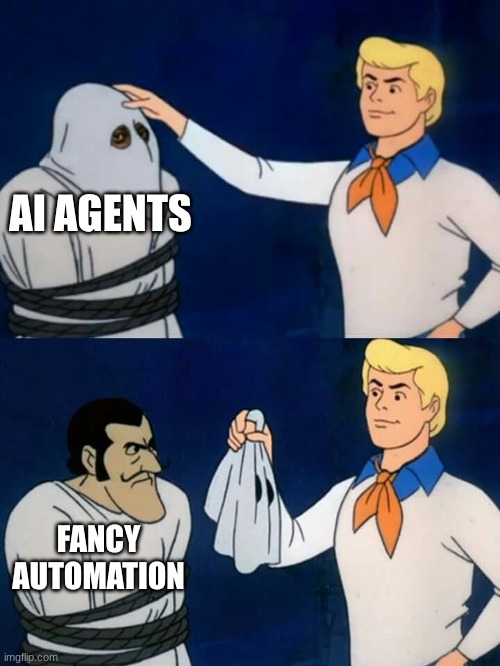
Ashri’s critique resonates in HR, where vendors pitch AI agents as capable of autonomously sourcing talent, conducting reviews, or addressing engagement issues. Yet, as he notes, most current AI systems, including those leveraging large language models (LLMs) or tools like LangChain, operate within strict boundaries. They can process data, follow instructions, or execute tasks via “if-this-then-that” logic, but they lack the ability to generate their own goals or navigate complex, unregulated contexts without human oversight.
For HR leaders, this distinction is crucial. Believing that AI agents can independently “think” like a recruiter or manager risks over-reliance on tools that deliver predictable automation, not transformative autonomy. What we’re often sold isn’t a revolutionary partner but a refined version of existing technology, dressed up in new terminology.
The Autonomy Spectrum: Where AI Falls Short in HR
Ashri’s discussion introduces a spectrum of agency, from self-directed systems (following assigned goals) to truly autonomous ones (generating their own goals). He cites an ambitious vision: an AI agent replacing a chief financial officer, tasked with increasing sales by hiring staff, adjusting pricing, or redesigning products - without external input. For HR, this might translate to an agent independently designing a diversity strategy, onboarding new hires, or resolving employee disputes. However, Ashri is clear: we’re far from this reality.
In HR, autonomy is particularly problematic due to the field’s reliance on context, ethics, and compliance. An AI agent might analyse CVs, flag disengagement, or suggest training plans, but it cannot grasp organisational culture, interpret nuanced employee feedback, or navigate legal risks like discrimination or data protection laws (e.g., GDPR or the Equality Act 2010). As Ashri warns, even advanced systems like Claude or GPT struggle with basic tasks, achieving only a 24% success rate in simulated organisational roles due to errors like misidentifying users or misinterpreting goals.
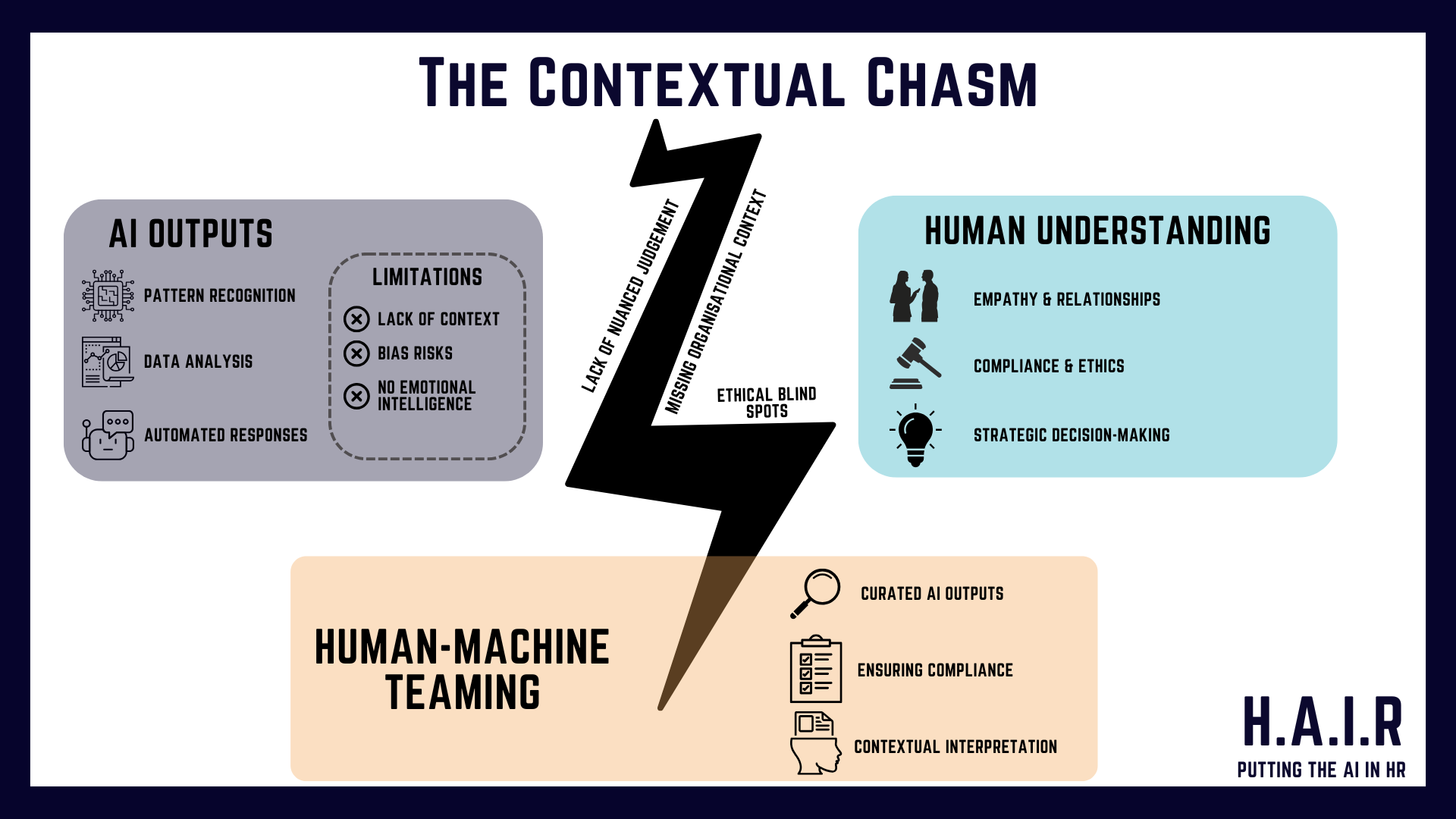
This “Contextual Chasm” - a term I’ve coined to describe the gap between data-driven outputs and human understanding - is especially acute in HR. An AI might flag a candidate as “unqualified” based on historical data, ignoring their potential or unique circumstances. Or it might misjudge an employee’s engagement, failing to account for personal challenges or project demands. Without human intervention, these missteps can lead to bias, legal risks, and eroded trust—hardly the hallmarks of autonomy.
The Real Value: AI as a Goal-Driven Ally
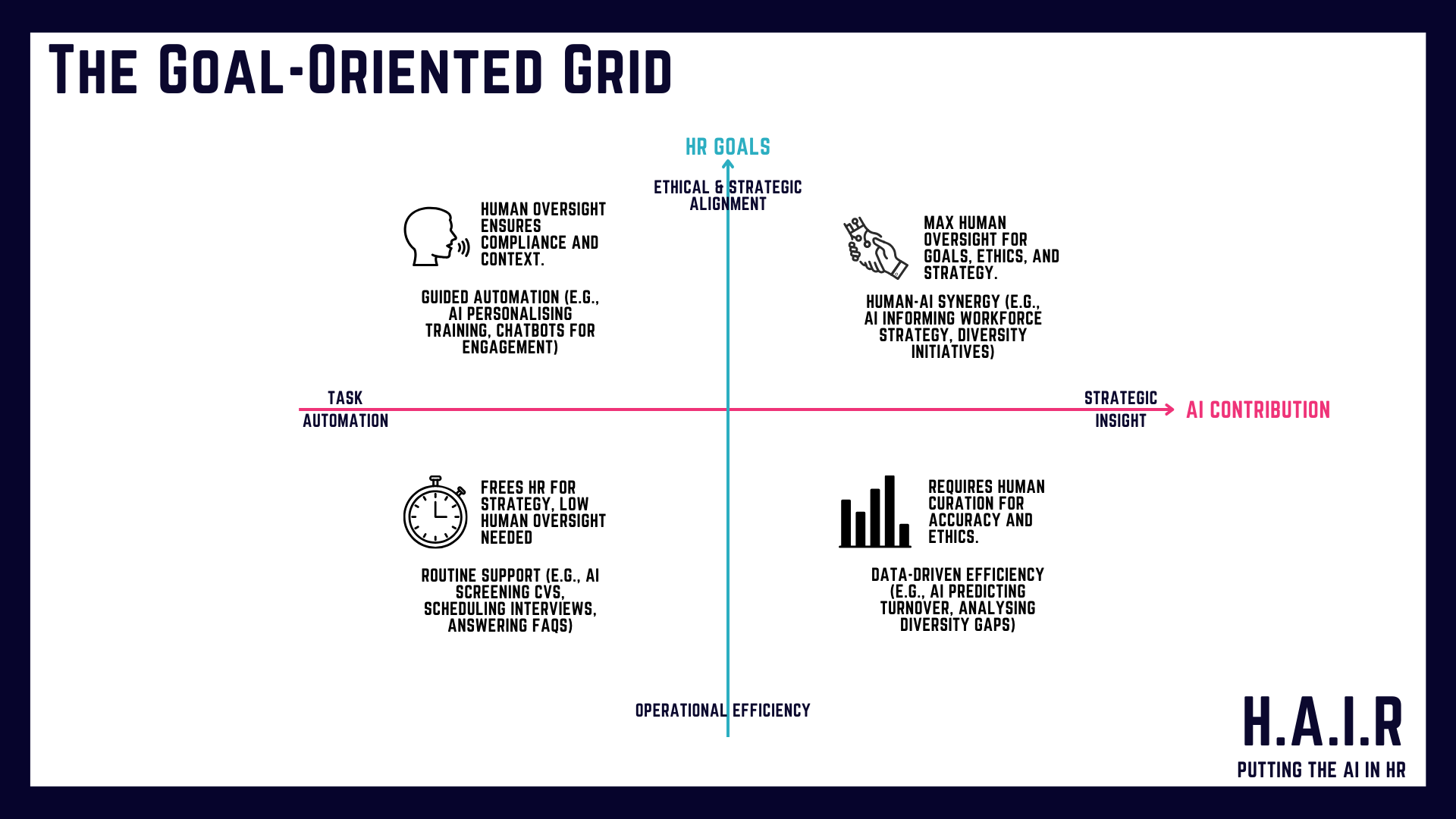
If AI agents aren’t the autonomous saviours vendors promise, where do they add value in HR? Ashri’s insights point to a more practical role: AI as a goal-driven assistant, operating within a structured environment to amplify human expertise. This aligns with what I call the Goal-Oriented Grid - a framework for HR leaders to position AI as a partner that supports specific, predefined objectives while humans retain control over strategy and judgement.
Here’s where AI excels in HR, grounded in Ashri’s philosophy:
- Task Automation with Precision: AI can handle repetitive tasks—screening CVs, scheduling interviews, or answering policy FAQs—freeing HR teams for strategic work. But it operates within predefined processes, not independent decision-making. For instance, an AI might rank candidates based on skills but leaves final hiring decisions to recruiters.
- Contextual Support Through Conversation: Leveraging LLMs, AI can enhance dialogue—e.g., personalising employee queries or guiding onboarding conversations. As Ashri describes with Open Dialog, this involves structuring conversations into goals (e.g., submitting an insurance claim) and scenes, using LLMs to manage dialogue while adhering to business logic. In HR, this could mean AI chatbots handling benefits questions while escalating complex issues to humans.
- Data-Driven Insights with Human Curation: AI can analyse workforce trends—turnover risks, diversity gaps, or training needs—but HR leaders must interpret and act on these insights, ensuring alignment with organisational values and legal standards.
The Goal-Oriented Grid ensures AI supports HR’s objectives without overstepping. It’s not about replacing human judgement but enriching it, much like Ashri’s vision of multi-agent systems where humans and software collaborate within defined environments.
A Practical Path Forward for HR Leaders
HR leaders must resist the siren call of the “AI agent” myth and adopt a disciplined approach to integration. Here’s how, inspired by Ashri’s caution and expertise:
- Define Clear Boundaries: Use AI for specific, goal-oriented tasks - automation, insights, or dialogue support - but keep strategic decisions (hiring, policy, engagement) human-led. Ask: What’s the goal, and does AI enhance or replace human judgement here?
- Challenge Vendor Claims: When evaluating AI tools, probe vendors on autonomy. Do their “agents” follow predefined rules, or can they generate goals independently? How do they handle bias, compliance, and context? If answers lack clarity, proceed with scepticism.
- Adopt the Goal-Oriented Grid: Frame AI adoption around structured goals—e.g., reducing admin time, improving candidate experience, or identifying skills gaps. Ensure processes are auditable, transparent, and aligned with HR’s ethical and legal obligations.
- Invest in Human-AI Collaboration: Train teams to curate AI outputs, challenge assumptions, and bridge the Contextual Chasm. This isn’t just compliance—it’s a competitive edge, ensuring AI serves HR’s human-centric mission.
The Future of AI in HR: A Partnership, Not a Phantom
The Ghost of AI Agents may captivate, but it’s time to unmask the reality. As Ashri argues, the rush to label every AI tool an “agent” risks diluting the term, confusing leaders, and misaligning expectations. In HR, the future isn’t autonomous AI running the show but a symbiotic partnership where AI amplifies human expertise within a Goal-Oriented Grid.
This shift isn’t incremental, it’s transformative. HR leaders who embrace AI as a goal-driven ally, not a mythical solution, will unlock efficiencies, enhance experiences, and maintain trust. Those chasing the ghost risk wasted investment, legal pitfalls, and missed opportunities.
Your Next Step: Unmask the Hype
Take action today:
- Audit your AI tools: Are they “fancy automation” or truly autonomous? Do they align with the Goal-Oriented Grid?
- Engage your team: Discuss how AI can support HR goals without replacing human judgement.
- Lead the conversation: Share this perspective on LinkedIn or industry forums to challenge the AI agent myth and inspire clarity.
Don’t let the ghost of hype haunt your HR strategy. Partner with AI wisely, and redefine its role as a collaborator in your organisation’s future.